
Hot Dip Galvanized Process: A Practical Guide to the Steel Protection That Actually Lasts
Hot Dip Galvanized Process: A Practical Guide to the Steel Protection That Actually Lasts
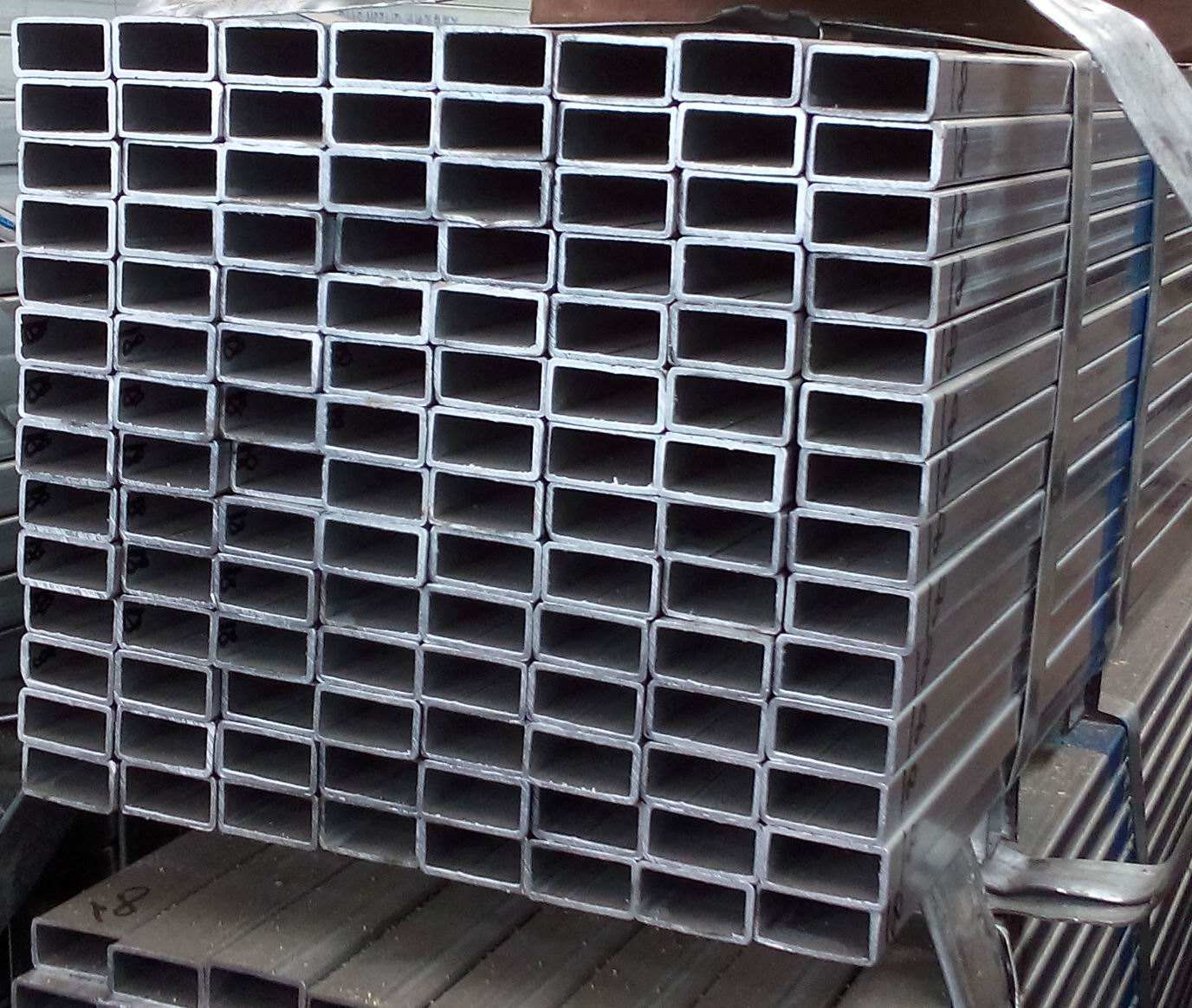
Steel is strong, but on its own it has one lifelong enemy—corrosion. The hot dip galvanized process was developed to give steel a fighting chance in the real world of rain, salt, heat, and pollution. Unlike paint, which only sits on the surface, galvanizing creates a metallurgical bond between zinc and steel. That bond is the reason guardrails, transmission towers, and industrial platforms survive for decades with minimal maintenance.
This guide explains the hot dip galvanized steel process, step by step, in plain language—how a typical hot dip galvanized line works, why each stage matters, and what quality actually looks like.
The Hot Dip Galvanized Flow Chart: A Bird’s Eye View
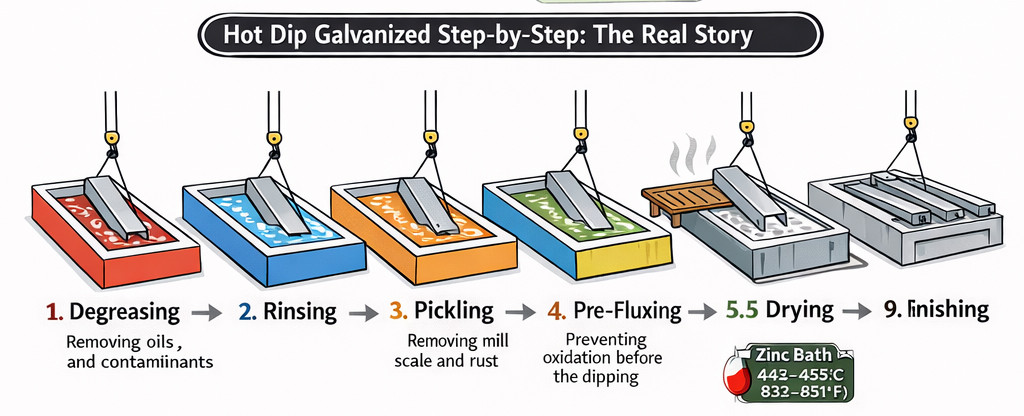
Before getting into the chemistry inside each tank, it helps to see the logical sequence of operations. Every professional galvanizing plant follows the same backbone:
| Phase | Step | Purpose |
| Surface Preparation | 1. Degreasing | Removing oils and organic contaminants |
| 2. Rinsing | Washing off the degreaser | |
| 3. Pickling | Removing mill scale and rust | |
4. Rinsing | Cleaning off the acid | |
Fluxing | 5. Pre-fluxing | Preventing oxidation before dipping |
5.5 Drying | Eliminating moisture to avoid zinc splash | |
Galvanizing | 6. Zinc Bath | Immersion in molten zinc |
Post-Process | 7. Cooling | Solidifying the coating |
8. Inspection | Thickness and appearance control | |
9. Finishing | Final touch-ups and preparation |
A galvanizing job is 90% preparation. If the steel surface is not chemically clean, molten zinc will simply refuse to bond.
Hot Dip Galvanized Process Step by Step
1. Degreasing
Fabricated steel arrives covered with drawing oils, shop grease, fingerprints, and workshop dust. In the degreasing bath—usually an alkaline solution—these organic contaminants are dissolved and lifted away. Heavy paint coatings must be removed mechanically beforehand; galvanizing cannot burn through thick paint.
2. Rinsing
A clean water rinse prevents the degreasing chemicals from being carried into the acid pickling stage. Cross-contamination shortens bath life and causes coating defects, so this simple step is critical.
3. Pickling (Scale Removal)
Here the steel meets diluted hydrochloric or, less commonly, sulfuric acid. Pickling dissolves mill scale and existing rust, exposing pure metallic iron. Most modern lines favor hydrochloric acid because it reacts faster and is easier to control.
4. Rinsing After Pickling
Another rinse stops the acid reaction and leaves a neutral surface ready for fluxing.
5. Pre-Fluxing
The steel is dipped into a zinc ammonium chloride solution. This stage prevents fresh oxidation and promotes proper wetting when the steel enters the zinc kettle. Think of it as preparing the surface so molten zinc can flow and react evenly.
5.5 Drying
Fluxed parts are dried or lightly pre-heated. Any trapped moisture would flash into steam in the kettle and create dangerous splashes or bare spots.
6. The Zinc Bath – Heart of the Hot Dip Galvanized Line
The clean, activated steel is immersed into molten zinc, typically 445–455 °C and 98%+ purity. Within seconds a metallurgical reaction begins. Zinc and iron form a series of alloy layers that become permanently bonded to the base steel, topped with an outer layer of pure zinc.
This is not paint—it is a new composite material grown directly from the steel surface.
7. Cooling & Quenching
After withdrawal from the kettle, excess zinc drains off and the coating solidifies. Parts may be air-cooled or water-quenched. Quenching can include a mild passivation treatment to reduce the risk of early “white rust” during storage.
8. Inspection
Quality control focuses on two things: coating thickness and uniformity. Magnetic gauges verify compliance with standards such as ASTM A123 or ISO 1461. Visual checks ensure there are no bare areas, ash inclusions, or drainage problems.
9. Finishing
Minor zinc runs or spikes are smoothed, ventilation plugs are removed, and pieces are prepared for safe handling and assembly.
Why the Hot Dip Galvanized Steel Process Works
Sacrificial Protection
Zinc is more chemically active than iron. If the coating is scratched, the surrounding zinc will corrode first and protect the exposed steel. Paint cannot do this—once scratched, rust creeps underneath and lifts the film.
Complete Coverage
Because galvanizing is a dip process, molten zinc reaches inside hollow sections, corners, threads, and weld seams—areas where spray coatings often fail.
Tough Metallurgy
The zinc-iron alloy layers are harder than pure zinc and highly resistant to abrasion, making galvanized products ideal for transport, erection, and outdoor service.
Predictable Life
Typical service life depends on environment and coating thickness:
Rural atmosphere: 40–60 years
Coastal: 15–30 years
Industrial: 10–20 years
Performance follows ISO 9223 environmental categories and is far more predictable than organic coatings.
Equipment Inside a Hot Dip Galvanized Line
A modern plant is more than a zinc kettle. Key components include:
Pretreatment tanks with temperature and chemistry control
Overhead cranes for smooth immersion angles
Drying ovens or pre-heaters
Zinc kettles with dross management
Fume extraction and filtration
Inspection stations with calibrated gauges
Process discipline, not just equipment, determines coating quality.
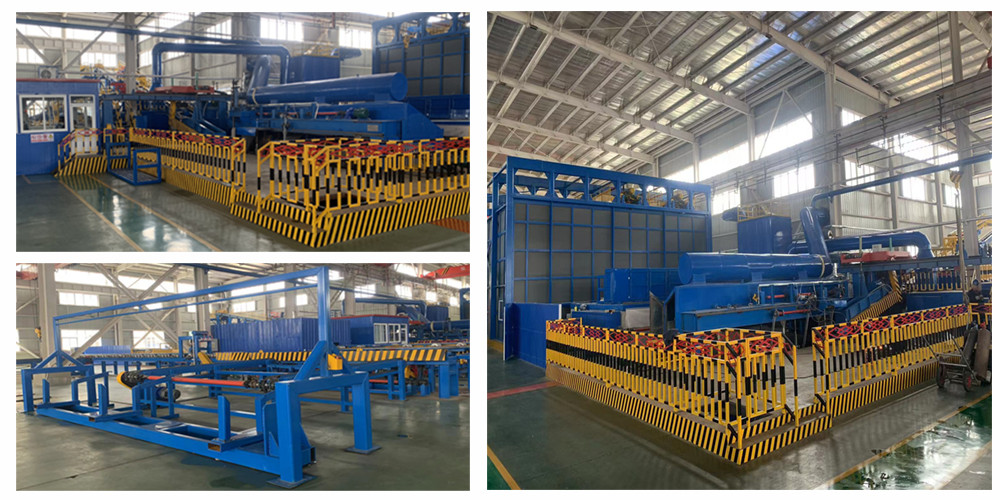
One set of the galvanized equipment of YUANTAI DERUN
Common Defects and Their Causes
Bare spots: poor cleaning or insufficient flux
Black stains: acid carryover from pickling
Excessive drips: incorrect withdrawal speed
White rust: storage without ventilation or passivation
Rough coating: high silicon steel chemistry
Understanding these links helps designers and fabricators deliver parts that galvanize well.